Why NYC AI Startups That Commit to Hiring Timelines Before the First Call Lose Fewer Engineers Mid-Funnel
Telling candidates the timeline upfront keeps engineers in play.
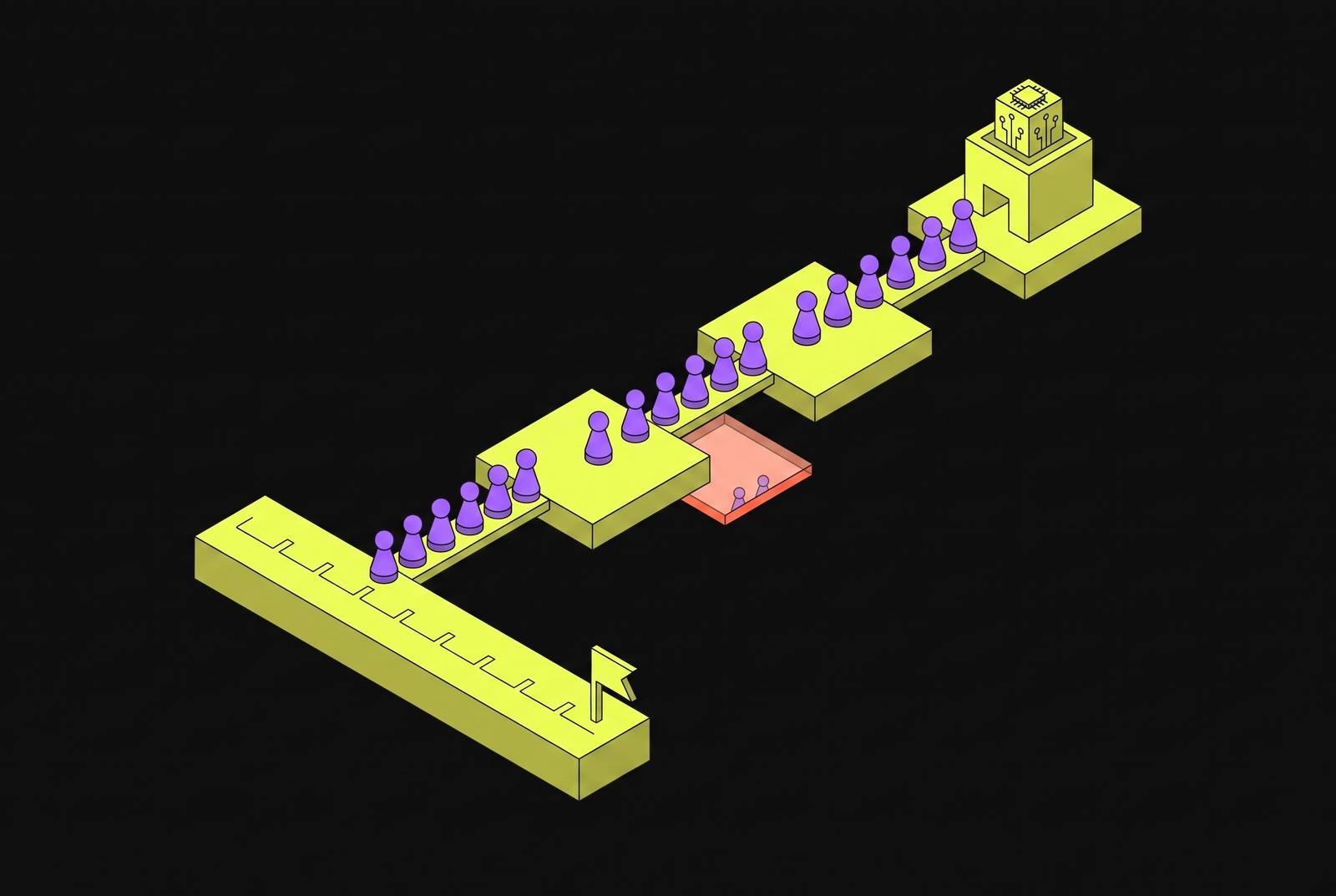
NYC AI startups lose fewer engineers mid-funnel when they agree to a clear hiring timeline before the first call and share salary ranges upfront. Knowing how long the wait will be gives candidates a reason to stay, while silence pushes them toward other offers. To hire engineers fast, teams need to make the process clear and keep the evaluation needed to make a good hire.
Why the NYC AI engineering market makes mid-funnel dropout expensive right now
NYC is now the second-largest AI hiring market in the U.S., with more than a thousand funded AI startups operating in the city. Those startups also compete with Bloomberg, JPMorgan AI Research, Two Sigma and Citadel for engineers. An engineer who is enthusiastic and exclusive on Monday may be fielding competing offers by Friday, leaving a startup days to turn interest into a hire.
Hebbia focuses on enterprise knowledge retrieval, OpenRouter on model routing, and Regal on voice AI agents. These are different products, but they illustrate the range of credible alternatives available to engineers considering an AI startup. A candidate does not have to wait for one company to get organized. In this market, an unexplained pause can mean losing someone who wanted the job but had another decision to make.
Why mid-funnel dropout happens: information vacuum, not compensation mismatch
Inside that compressed window, the main dropout mechanism is uncertainty about what happens next. Candidates do not know how much time the process will take, so silence becomes something they must interpret. Anxiety fills the gap, and withdrawal resolves it. The startup may still be interested, but the candidate cannot plan around interest that has no next step.
The end of the first call is especially exposed. A candidate has invested time and learned enough to picture the work, yet may leave without knowing when the company will respond. Without a clear timeline, the candidate cannot tell whether the team is taking time to evaluate them or the search has stalled. The absence of information becomes part of the decision about whether to continue.
Hiring managers are right to worry about promising dates they cannot meet. A missed commitment can damage trust, especially when a team presents an aspiration as a guarantee. But a committed range is different from an unconditional promise. Saying that the team aims to decide within three business days of the final interview communicates intent without pretending that delays are impossible. It gives the candidate something more useful than silence.
What the upfront timeline commitment actually does to candidate behavior
A timeline commitment turns an open-ended wait into a bounded one. Candidates in several hiring processes can compare how long they would have to wait for a decision with an offer they already have. They have a reason to keep the startup in contention even when another offer arrives first. The commitment gives candidates a defined event to wait for.
That makes timeline transparency a retention device. The startup is designing the conditions under which a candidate can remain engaged. Regular updates support that design because an initial promise loses value if the process later goes quiet. Public interview steps also make the commitment less dependent on what one recruiter happens to say.
For generative AI roles, the team should send the offer within hours of the final round. Yet a fast offer cannot recover a candidate who has already accepted elsewhere during an unexplained gap. The promise made before the first call ties the rush to send an offer to the steps that come before it. It also distinguishes the startup before technical evaluation begins. At first contact, a clear timeline signals a more organized alternative to companies that leave candidates guessing.
Role misclassification as a hidden source of mid-funnel dropout that timeline transparency exposes
Candidates also drop out when they expect one kind of AI engineering work and find another halfway through the process. To the hiring team, that can look like the same unexplained disengagement caused by delay. The root cause is different, but the information gap is similar.
The differences become visible during evaluation. AI engineers tend to optimize for shipping and user impact, ML engineers for systems health in production, and research engineers for compute autonomy and research peers. Someone expecting research autonomy may disengage when a take-home or hiring manager conversation reveals a culture built around shipping velocity. A faster response merely reaches the wrong candidate sooner.
Most Series A/B NYC AI startups need a research engineer, with a pure research scientist needed only when research output is the core product. An unclear job posting can therefore get people excited at first, only for them to lose interest when they learn what the work is. Pair the timeline with a precise role description before the first call. That description should state what the engineer will own, what the hardest production problem is and who has authority to fix it. Specificity prevents the mismatch from entering the funnel, sparing interviewers the task of repairing it later.
How do NYC AI startups hire engineers quickly with upfront salary and timeline transparency?
Start with scheduling, before the candidate picks up the phone for the first interview. Salary ranges belong in the job description, while the timeline belongs in the scheduling conversation. The commitment should be spoken aloud. “We aim to have a decision to you within three business days of your final interview” gives the candidate a concrete expectation without presenting the target as an absolute guarantee.
The interview structure emerging across NYC AI startups in 2026 gives that commitment a workable frame. The first round is typically a 60-minute call with a founder or technical lead covering the product, what the AI needs to solve and the engineer’s ownership. Questions such as “What's the most interesting AI system you've built?” and “What were the failure modes you had to engineer around?” anchor the discussion in production experience. It is not a hypothetical hiring shape.
The take-home then works best when it reflects actual work, such as writing an evaluation harness from a dataset of model outputs. That tests whether candidates understand that evals are the job. CodeSignal launched agentic coding assessments in 2026 to measure what engineers can build with AI tools, giving teams another way to test people on the work they would do. Better filters make a defined timeline more credible. For founding engineers, roadmap clarity belongs in the same conversation because “product isn't real enough yet” is a common reason to pass, and a vague process can reinforce that concern.
The legitimate objection: moving fast compresses signal-gathering in a domain where bad hires are costly
An early deadline can pressure a small team to decide before it has enough evidence. AI engineering hires are expensive to unwind when they go wrong. A 48-hour offer after the final round can secure an excellent engineer, but it can also close someone who was never evaluated on the right dimensions. Speed alone says nothing about the quality of the decision.
Early-stage processes often make this tension worse. Some are too thin to reveal how a candidate works, while others borrow big-company interview structures that were never designed for a team of five. Neither problem is solved by announcing a faster deadline. The distinction is between evaluation time and coordination delay. A timeline commitment should cut the time lost to coordination while keeping the time needed for evaluation.
A startup can bound the process in business days while retaining a founder technical call, a high-signal take-home and a structured architecture conversation. The commitment makes those parts fit together rather than removing one to create the appearance of speed. That is a coordination decision. Transparency also extends to the tools used in evaluation. If the startup uses AI-assisted screening, telling candidates before the first call avoids losing their trust when those with technical know-how spot it halfway through the process.
What founding engineer compensation in NYC signals about the cost of a lost candidate
Slowing down to avoid a bad hire has its own risk when the search is for a founding engineer. The candidate pool is narrow, and compensation packages are large. NYC founding engineer pay in 2026 runs into the hundreds of thousands from pre-seed through Series A, reaching $240K–$340K at Series A with meaningful equity. Those figures show how intensely startups compete for the thin slice of senior engineers who can fill these roles.
NYC has also closed most of the pay gap with San Francisco, with pay now within a few percentage points of SF levels. That lets local startups compete for the same candidates with much the same pay. Companies still need to make the scope and process clear enough for an engineer to stay engaged.
Scope transparency is particularly important when “founding engineer” sounds like “technical co-founder” to the person applying. A founding engineer receives a modest equity slice and executes the founder’s technical vision, while a technical co-founder receives a substantial share and has co-equal decision authority. The distinction belongs in the first-call discussion. Discovering it later can undo the time already spent on technical evaluation. A salary range, an equity discussion and a clear statement of authority prevent different expectations from surviving until the offer stage.
How to build the upfront timeline commitment into a repeatable process rather than a one-time gesture
At these stakes, one recruiter’s clear promise is not enough. A repeatable process puts the timeline in the scheduling email, repeats it aloud at the start of the first call and reinforces it at each handoff. Public interview steps on the careers page give candidates a stable reference. This makes transparency part of the process design rather than a personal style. It also gives the team a shared account of what the candidate has been told.
Handoffs are where silence can creep back in. After a take-home submission, a hiring manager call or during reference checks, the candidate may have completed everything asked of them and still have no idea what comes next. A brief status update should explain where the process stands and when they will hear again. If the timeline slips, that update preserves the distinction between a delay and abandonment.
Salary transparency belongs in that same system. Publishing ranges before the first call addresses uncertainty about compensation and reduces offers declined because of pay mismatches. For a non-technical founder running a first engineering search, these commitments provide a way to hold speed, clarity and rigorous evaluation together. The organizing principle is straightforward. Candidates should know what they are being evaluated for, what the role pays and when they can expect a decision before they invest in the process.