NYC Fintech Startups With Strong Engineering Cultures
Wall Street's pay scales shape how NYC fintech hires engineering talent differently.

NYC fintech engineering culture is not a dimmer copy of what exists in the Bay Area. It runs on different inputs entirely: a talent market set by Wall Street's pay scales, a density of hard financial problems, and a working culture that still expects people in the same room. Those three conditions explain almost everything about how a strong NYC fintech engineering org looks from the outside, and they explain why the signals you should check for here differ from the signals that matter in other markets.
Why NYC produces a distinct kind of fintech engineering culture
Start with compensation. Goldman Sachs, JPMorgan, Citadel, Jane Street, and Two Sigma all draw from the same pool of engineers that NYC fintech startups need, and a senior engineer who writes solid Python and SQL has standing offers from firms that can pay more than almost any early-stage startup can match on base salary alone. That single fact shapes the whole hiring market. It means a startup competing on compensation is already losing, so the startups that win instead compete on the work itself: ownership, technical latitude, and problems that are actually hard.
That competitive pressure also filters who ends up in the pool to begin with. Engineers who stay in or near finance tend to be strong in data systems, low-latency infrastructure, and financial modeling, because those are the skills finance pays for and rewards. NYC concentrates that kind of engineer at a density other cities don't match. A startup here is hiring someone whose instincts were shaped by adjacency to systems where a few milliseconds or a rounding error has real financial consequences.
The third condition is geography, and it isn't incidental. In-person and hybrid norms are far more entrenched in NYC than in other major tech hubs, and that affects how teams are built, how knowledge actually moves between people, and how a culture survives past its founding team. If a remote-first hiring strategy works fine in other markets, here it closes off a meaningfully larger share of the local pipeline. NYC fintech startups also cluster by function: Midtown and Flatiron hold most of the VC-backed product engineering teams, while Downtown, FIDI, and the Financial District hold the quant and low-latency shops. That's not a real estate footnote. Physical proximity to finance is part of how these companies recruit, and part of how their engineers absorb the habits of the industry around them.
What separates genuine engineering culture from finance-domain depth
The most important correction to make before going further: a lot of what gets called "engineering culture" in NYC fintech is actually finance-domain expertise, and the two are not interchangeable.
Domain depth is real and valuable. Engineers who've worked on payments, ledgers, reconciliation, or risk systems understand audit trails, compliance controls, and what it means to watch money move at scale under regulatory scrutiny. That knowledge takes years to build and it's worth paying for. But knowing how to build inside a regulated financial system is not the same as working somewhere that grows engineers technically. A company can have deep domain expertise and still offer no real path for an engineer to get better at systems design, architecture, or the craft itself.
Genuine engineering culture shows up in structural choices, not in domain knowledge. You can see it in public leveling frameworks, in engineers owning production systems early rather than after a year of onboarding tasks, in technical leadership tracks that don't force someone into people management to keep advancing, and in hiring processes built to test reasoning rather than syntax recall. Kensho Technologies offers a concrete benchmark here: its career development framework is public on GitHub, laying out distinct tracks for Individual Contributor roles across software engineering, ML engineering, research science, and SRE, alongside a separate People Leader track for engineering management, with staff-plus and tech lead positioned as senior-level growth options inside the IC track. That's a documented commitment, not a line in a careers page about "growth opportunities."
The distinction matters more now than it did a few years ago. AI-native tooling is starting to compress how many domain-specialist engineers you need to do the same work. When that compression continues, smaller teams that do research-intensive work and combine financial domain depth with real ML and systems engineering strength gain the advantage over teams that just scale by headcount.
Low-latency infrastructure as the clearest engineering signal in NYC fintech
If there's one indicator that holds up across nearly every strong engineering org in NYC fintech, it's whether the company has made a real infrastructure bet, particularly around latency. These bets are expensive to fake. They require systems design discipline, careful performance profiling, and production practices that have to hold up under pressure, and all of that elevates the skill level of every engineer working near the system.
Hudson River Trading is a useful reference point here. The firm describes its own computing environment for research and development as one of the most advanced in the world, and separately as one of the most sophisticated. Building and maintaining that kind of environment is not something a company backs into. It takes sustained investment and engineers who are given the room to go deep on performance problems most companies never touch.
Mercury offers a quieter but equally telling signal: its backend is written in Haskell. Choosing a language with a steep learning curve and strong type guarantees is a deliberate statement about what the engineering team values and what it expects from the people who join it. It also means engineers working in that codebase get an unusual amount of product leverage relative to the size of the company, because strong typing and functional discipline let a smaller team move with more confidence.
The pattern extends further. Companies building on real financial rails, regulated exchanges, payments APIs, fraud detection systems, run into infrastructure constraints that force engineering rigor whether they want it or not. Kalshi is one example of this kind of rail: it operates as a fully regulated financial exchange built specifically for event contracts, officially designated a Designated Contract Market by the CFTC. Operating a regulated exchange imposes constraints that shape the engineering culture around it. But if a company only wraps someone else's financial API, it doesn't develop that same discipline automatically. Wrapping an API is a legitimate business model, but it doesn't force the same depth of engineering practice you get when you own the underlying rail.
AI Integration's Reshaping of Engineering Roles in NYC Fintech Startups
The companies with real engineering cultures in NYC fintech aren't bolting AI onto an existing product as a feature. They restructure the product itself around it, so the actual shape of the engineering work changes too.
Sardine is a clear example of what that restructuring looks like in practice. Recent hiring audits place it as one of the most engineering-dense companies in the space, and it's currently hiring ML Engineers, Forward Deployed AI Engineers, and a Staff Engineer focused on fraud prevention. Its product is AI-driven fraud and compliance tooling, and its customer base spans banks, fintechs, ecommerce merchants, crypto exchanges, and online marketplaces. Engineers building that tooling are writing systems that run inside other companies' critical infrastructure. Mistakes propagate outward immediately, so the bar for rigor is correspondingly high.
That role taxonomy is worth understanding on its own terms. An ML Engineer role is typically about building and maintaining the models themselves. A Forward Deployed AI Engineer sits closer to the customer, adapting and implementing AI systems inside a client's specific environment. A Staff Engineer carries technical leadership across a problem area, often with no direct reports. Knowing which of these three an open role actually is matters, because the day-to-day work and the skills it builds are genuinely different across them.
Early-stage and founding engineer roles in NYC fintech
A founding engineer title is a different job entirely, one that shapes the architecture, the hiring bar, and the culture of every engineer who joins after.
At seed stage, the team is often just a handful of people, so the first engineer is making real architecture decisions, setting code standards from scratch, and frequently defining the technical bar every future hire gets measured against. It's the literal scope of the job at that stage of a company.
Sava, a YC-backed NYC fintech, makes this concrete. Its founding engineer role involves building agent-driven workflows for compliance, document generation, and asset movement, and integrating with custodians, banks, and legacy financial systems, all in person in New York, working directly alongside the founders. The technical surface area is wide, the systems involved are regulated, and there's no buffer between the engineer and the founding team's decisions.
Finding these roles takes more effort than scanning job boards. Much of the hiring at this stage happens through warm introductions, niche engineering communities, and curated platforms rather than public postings, so if you rely only on applications, you miss a large share of what's actually available. Two companies currently entering the ecosystem illustrate the archetype well: Pennant, part of a recent YC batch, gives institutional investors, public companies, and corporate advisors voting and governance intelligence, and KelAI, part of another YC batch, is building an autonomous alpha engine for hedge funds, founded by a former WorldQuant portfolio manager. Both are at the stage where a single founding engineer will shape the technical direction of the company for years.
Developer-first infrastructure companies as an underrated engineering culture category
One category of NYC fintech company gets overlooked in most conversations about engineering culture: developer-first infrastructure, where the customer buying the product is another engineer. That changes the incentive structure in a meaningful way, because a bad developer experience is immediately visible to the people paying for it.
Moov is a clear example of the category, built as a developer-first payments platform offering ACH, card, and bank account verification APIs for companies building financial products (it's headquartered in Cedar Falls, Iowa, not New York, though the model it represents is common in the NYC fintech ecosystem). Because its customers are engineers, every design decision in the API gets evaluated by people who know what good API design looks like, and that accountability pushes the product, and the team building it, toward real craft.
Lithic, which provides card-issuing infrastructure described by its own documentation as modern card issuing infrastructure that lets developers create, manage, and control payment cards through its APIs, sits in the same category. So does Array, which builds white-label credit, identity, and financial wellness tools that banks and fintechs embed directly into their own products. In both cases, the engineering team is building the rails other products run on, and that creates a form of accountability that consumer-facing products rarely have to answer to.
For an engineer evaluating a company like this, the product itself is the evaluation. The quality of the API documentation, the design choices in the SDK, and the history of the changelog are all visible evidence of whether the engineering team has real taste and real autonomy. None of that is marketing copy. It's the output of actual engineering decisions, sitting in the open for anyone to read.
Developer-first infrastructure has a real limitation. Developer-first infrastructure can calcify into maintenance work once the core API stabilizes, and growth can slow because the customer base is often other startups, and they have their own funding cycles. The way to check for this is to ask how much of the current roadmap is new product work versus upkeep, and whether the team is still making real architecture decisions or just maintaining what already shipped.
In-person collaboration norms as a structural feature of NYC fintech engineering, not a perk
In-person and hybrid expectations in NYC fintech are a deliberate structural choice, and that choice shapes how knowledge moves through a team, how junior engineers get better, and whether a culture can survive a change in leadership.
Ramp is a useful case study in what that choice looks like at scale. Its engineering hiring is concentrated in New York and predominantly in person, and at a company processing billions in spend every year, that reflects a deliberate decision about how engineering knowledge gets shared and how product decisions get made rather than an inherited policy nobody has bothered to revisit.
For an engineer evaluating an opportunity, checking the distinction directly matters. A company that lists "NYC preferred" without offering real in-person infrastructure, shared workspace, regular on-sites, engineering rituals that actually require physical presence, is making a different promise than a company that has built its culture around being in the same room. Asking about the actual in-person rhythm during an interview is a reasonable question, and the answer tells an engineer a lot about what they're walking into.
Fully remote roles do exist in NYC fintech, and that's a legitimate option for the right engineer. But the pool of strong candidates for those roles tends to be smaller, and the companies offering them are often not the ones with the strongest in-person engineering cultures. Weigh that as a trade-off, not as a mark against remote work itself.
Community also plays a real role in how this culture propagates. NYC's engineering communities, AI and ML meetups at NYU and Columbia, the Recurse Center alumni network, fintech-specific events, are part of how engineering relationships actually form and how reputations travel through the market. Engineers who show up in those communities tend to be more visible to companies with genuine cultures than engineers who rely entirely on job boards to find their next role.
Telling a Real Engineering Culture From a Finance Org With Engineers In It
Every signal this piece has walked through adds up to a practical test, and most of it is checkable before an engineer ever sits down for a first interview. The infrastructure signal asks whether a company has made technical bets that are expensive and visible: a type-safe backend language, a custom low-latency system, a public API with real versioning and an honest changelog. Those choices cost something to make, and companies that make them anyway are telling an engineer what they actually value.
The leveling signal asks whether a company has a public or clearly articulated framework for how engineers grow, with real tracks for both individual contributors and staff-plus engineers. A company that has written this down and made it available is making a different kind of commitment than one that shrugs and says it depends on the business, and Kensho's public GitHub framework remains the clearest benchmark for what this looks like done well.
The hiring process signal asks whether the interview tests domain reasoning and system design, or just syntax recall. Regulated fintech startups need engineers who are comfortable with audit trails and compliance constraints, and no LeetCode medium can test for that. Companies with real engineering cultures know this and build their process around it.
The ownership signal asks how early engineers actually own production systems. At companies like Hudson River Trading and Sardine, early ownership is named explicitly as part of the culture, something that happens from the start rather than something earned after a year of onboarding work.
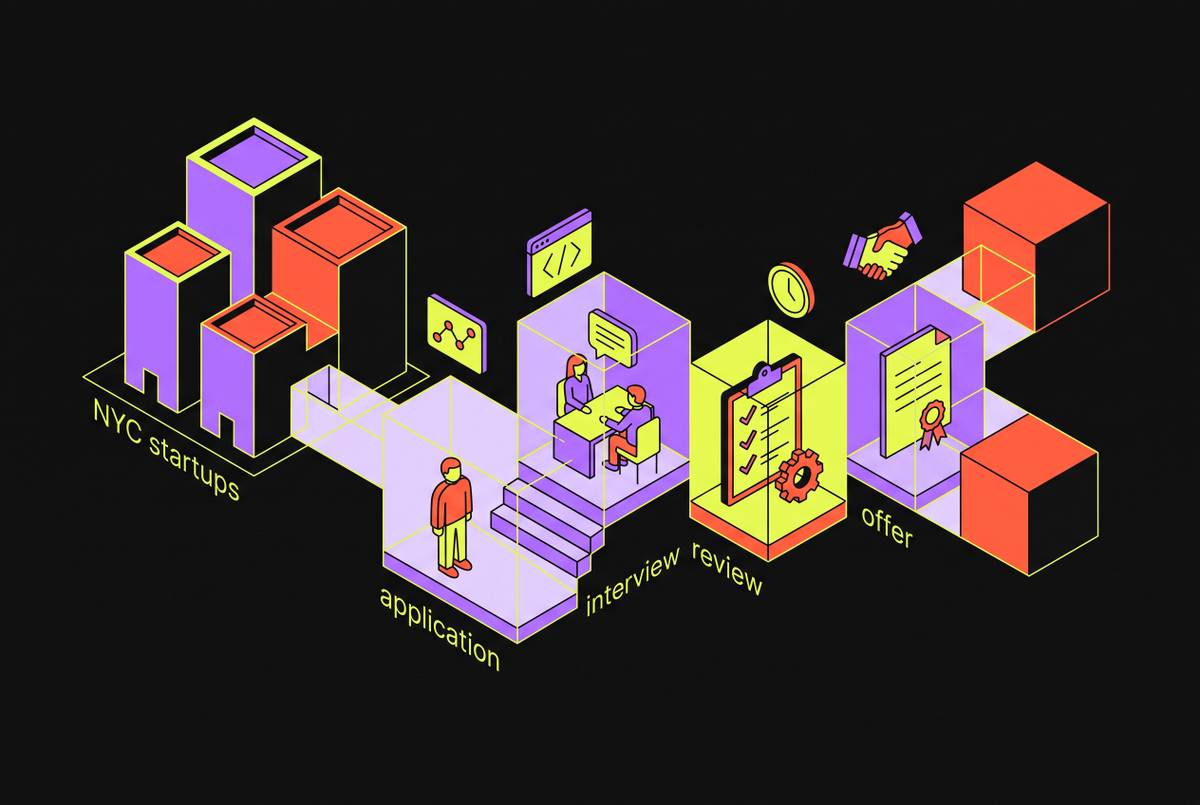
The speed signal asks how long the hiring process takes. Strong engineers don't sit in open pipelines for long, and a company running a six-week interview loop is revealing how it values an engineer's time, whether or not that's the intended message. Curated platforms and direct referrals that shorten the path to a decision are evidence that a company understands the market it's actually competing in and knows it has to move at the same speed as the engineers it's trying to hire.