Founding Engineer Role Realities at NYC Startups
ML engineers should verify whether the job demands model depth or end-to-end product ownership.
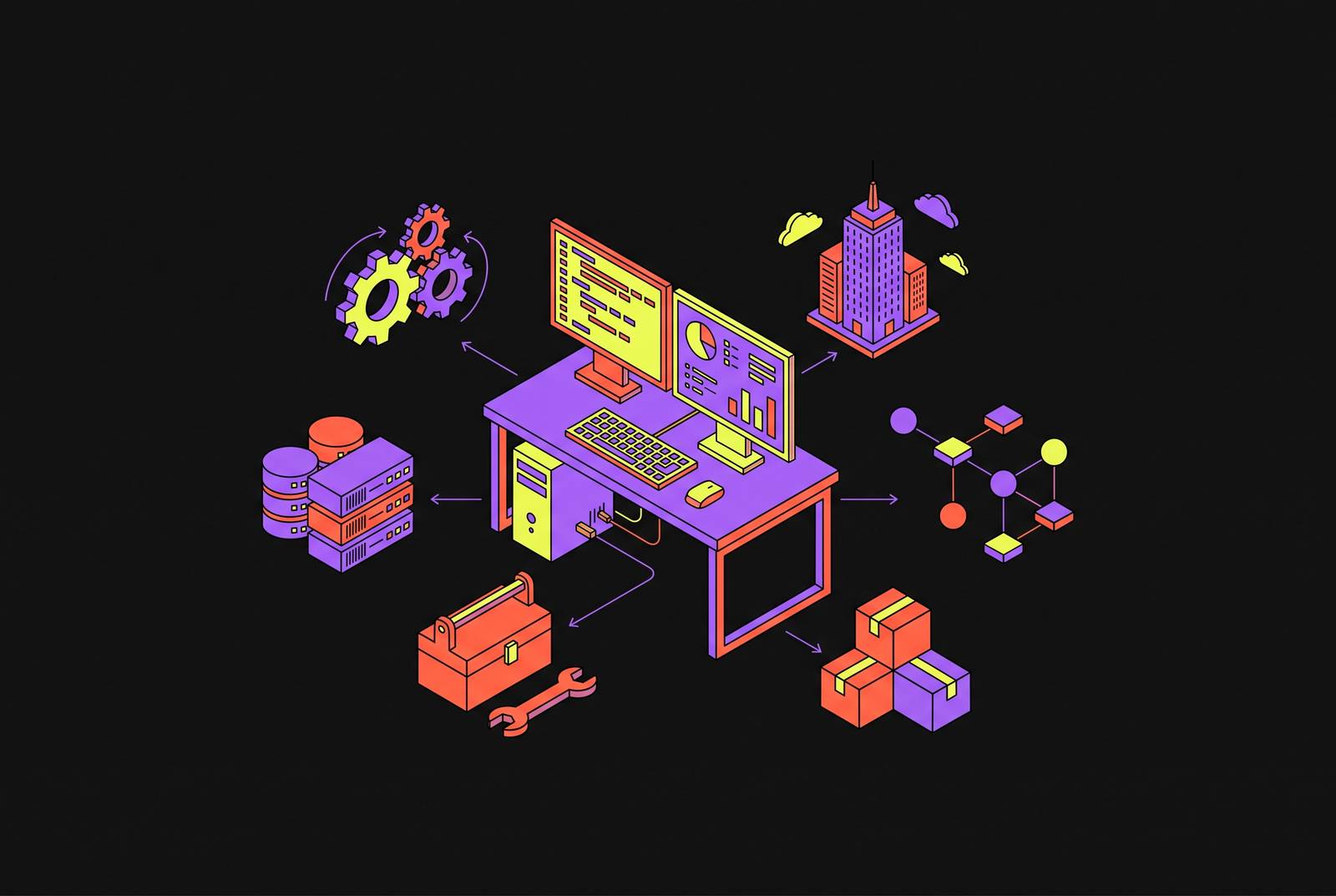
Founding engineer roles at NYC startups in 2026 offer real ownership in exchange for responsibility across the whole product. For ML engineers evaluating opportunities at Series A and Series B AI startups, the key distinction is whether the job rewards model depth or demands end-to-end product ownership. The title alone cannot answer that question, and neither can the salary.
Why founding engineer demand in NYC is running hot right now
Founding engineer and first-of-function hiring in NYC is running at an intensity not seen since 2021, driven by a fresh wave of seed and Series A funding. The hiring logic is lean by design. Founders want one exceptional engineer before they commit to a larger team. That makes the first technical hire central to how the company spends its early capital, rather than simply the first person on an eventual engineering roster.
Fonzi’s research on how AI startups build their engineering teams shows that the founding engineer is the main technical hire at seed stage. Founders are structuring their first teams around one exceptional engineer rather than spreading early capital across multiple generalists. Its talent network reports that hiring is just as active among engineers looking at founding-stage roles in NYC. The demand is therefore not just for more engineers, but for engineers who can carry a much wider job.
That distinction matters when reading the market. A wave of funding can bring new jobs without bringing the support an experienced engineer expects. In this model, a small team is the starting assumption, and the founding engineer is expected to make it work.
What the founding engineer title actually means versus adjacent roles
An early software engineer usually owns one area or set of features and works from tickets. A founding engineer owns the full product and helps define the problem when there is no specification. Direct user calls are part of that responsibility.
The equity distinction follows the scope distinction. An early SWE may get token equity, while a founding engineer gets a real ownership stake. The “founding” modifier signals a relationship closer to a co-builder than a conventional employee. Product judgment, decision rights, and cultural ownership belong in that relationship. Without those, the title can promise ownership while the job leaves the engineer with only responsibility.
But a founding engineer is not automatically a co-founder. When a second engineer gets an informal title without clear decision rights, the engineer and founder can expect different things, especially when the company pivots. If that person should have been a co-founder, the arrangement called for founder equity and IP assignment pre-incorporation. Records of placements and how roles are set up, including those from Fonzi, help show this difference through actual hires.
The line against ML engineer and research scientist roles is different. Those roles emphasize model depth, while the founding engineer emphasizes breadth and shipping velocity. For someone comparing ML engineering opportunities at Series A and Series B AI startups, this is a more useful distinction than treating every AI role as interchangeable. The engineer will either deepen one technical discipline or build and maintain the production system end-to-end.
What AI tooling has done to the scope one founding engineer is expected to carry
AI development tooling has expanded what one engineer can produce, and early teams are being built around that capacity. Architecture, product, infrastructure, and iteration can now sit with one person at the same time.
That is the structural difference from the larger teams associated with the 2021 hiring wave. Lean founding teams can aim for output that previously called for more people because tooling raises the ceiling on individual work. But a higher ceiling does not narrow the engineer’s responsibility. The person shipping the product still owns the system as a whole, even when tools help produce more of it.
For candidates, this creates leverage and weight together. Tool fluency increases how much one engineer can carry, while the job increasingly assumes that fluency from the start. The gap between an engineer who uses these tools well and one who does not compounds over months of shipping. It is therefore part of the role’s operating model.
The important boundary is between producing work and judging it. More output does not, by itself, answer whether the right product is being built or whether it works for users. The founding engineer still has to answer those questions. The hiring bar consequently extends beyond familiarity with AI development tools to ownership of production AI systems.
The technical profile NYC AI startups are actually hiring for
Intelatek’s founding engineer postings ask for engineers who have built AI-powered products end-to-end, with real users. They specify 2–8 years of experience and comfort with ambiguous problems in small teams. The experience range leaves room for different career paths, but the production requirement is explicit. Interest in AI is not a substitute for having shipped it.
The postings name retrieval, memory, agent frameworks, context engineering, and eval pipelines as areas candidates need to discuss fluently. They also pair strong software engineering fundamentals with awareness of developments in LLMs and agentic systems. This is not a request for vocabulary alone. The underlying bar is an engineer who can explain what makes an AI product work or fail while also owning the software around it.
The broader founding-level profile now includes model architecture awareness, fine-tuning familiarity, and scalable deployment. That moves the bar beyond prompt engineering proficiency. Product judgment also appears explicitly in live postings, because the work is judged in a user’s hands as well as in a technical review. Knowing how something was built is only part of knowing whether it is good.
At seed stage, this favors a senior software generalist who has shipped LLM features in production over an ML PhD focused on research output. That is a statement about the two backgrounds’ fit for the job. A startup seeking its first AI hire needs someone who can move across frontend, backend, infrastructure, QA, and data.
For an ML engineer considering a founding role, the decisive evidence is therefore broader than model work. End-to-end delivery, production-system fluency, and product judgment are the named criteria. A candidate can have substantial technical depth and still be mismatched if the role requires ownership across boundaries they do not want to cross. Conversely, breadth only counts here when it includes real AI systems.
How do you evaluate equity and cash in a 2026 founding engineer offer?
The ownership bet is front-loaded. Equity is steepest near the beginning and drops sharply as the company adds people, so entry timing matters. An earlier grant’s appeal depends on what the ownership stake could actually be worth under realistic conditions, weighed against the work and risk the engineer takes on.
Cash pay also varies widely among NYC founding engineer roles. Early-stage generalist jobs are in a different pay market from roles in agentic-systems or applied AI research that call for greater ML depth. Stage, domain, and technical demands all help explain the spread.
An offer for full-product ownership cannot be understood in the same way as an offer to own one defined feature set. The same applies to decision rights. Equity may signal that the engineer is a co-builder, but it does not resolve ambiguity about who decides what happens when the product changes.
For an ML engineer comparing Series A and Series B offers, stage provides context. The comparison still turns on the actual role, the cash, the ownership stake, and the depth or breadth of responsibility.
Speed makes clarity more important. The best founding engineers tend to move fast, with median time-to-decision under 23 days. Startups competing for them need to be transparent about equity, timeline, and role scope from the first conversation. A fast process is useful only if the candidate has enough information to understand the bet.
How the interview process differs from what most engineers expect
Founding engineer interviews test product judgment and production-system thinking more directly than the algorithmic loops many experienced engineers have trained for. The process is also a test of whether the engineer and founder can work together under uncertainty. The company is looking for someone who can help decide what to build.
Early conversations help both sides weigh the scope of the job and how well they fit, before hands-on work and deeper talks with the founder. The practical exercise may be a scoped take-home that builds a small real feature end-to-end. It may instead be live pairing on a simplified problem from the roadmap.
An eval harness exercise is another format, increasingly common in 2026. Here, the candidate designs how to measure whether an AI feature is helping the user. That tests more than the ability to make a feature run. It asks the engineer to connect technical behavior with product value, which is exactly the judgment the role requires.
The later conversations are often long and candid, covering technical depth, product judgment, risk tolerance, and simple compatibility. Informal reference checks may also include former colleagues who are not on the list the candidate gave. These steps reflect how much depends on one early hire. At the same time, an overly heavy process too early can signal bureaucracy.
Candidates are making their own judgment throughout. The founder’s choices about the process reveal how they think about the work and the relationship. A company asking for broad ownership while running a rigid, impersonal assessment sends a mixed signal. The interview is therefore not just a hurdle before the role, but an early view of how the role might function.
How founding engineers are actually found — and why cold applications rarely work
Founding engineer roles almost always go through warm introductions. Founders often form these relationships while raising funds, before a job is made public. The search is less a queue of applicants than an extension of an existing network. Engineers who appear through that network can enter the conversation before there is a posting to answer.
Intelatek’s live postings describe another route into that same kind of visibility. Candidates are matched with companies that submit competing salary bids directly to them. The engineer is being found and approached, rather than trying to win attention through application volume. That model fits a market in which both sides need to establish interest and terms quickly.
Fonzi offers one version of this approach through screening, matching, and interview requests with salary bids upfront. Its marketplace also makes salary and the decision timeline known before an interview. Those details matter because the candidate is assessing a high-responsibility role on a short timeline. They make the conversations about ownership and fit better informed.
For engineers, the practical implication is to become findable. Public work, visible opinions, and existing credibility in the NYC AI ecosystem help create that visibility. Engineers from startups or big tech who have shipped production AI systems and can work across the stack have evidence that belongs in those conversations. Optimizing cold application volume does little to expose that evidence where these searches actually happen.
The right founding engineer opportunity is a match between broad responsibility, meaningful ownership, clear decision rights, and the work the engineer wants to do. That match is more likely to come from being visible and referred than from applying into a void.